Quick Summary
After storm damage, the first priority is making the site safe. Fallen or unstable trees need calm assessment and controlled clearance, not rushed cutting.
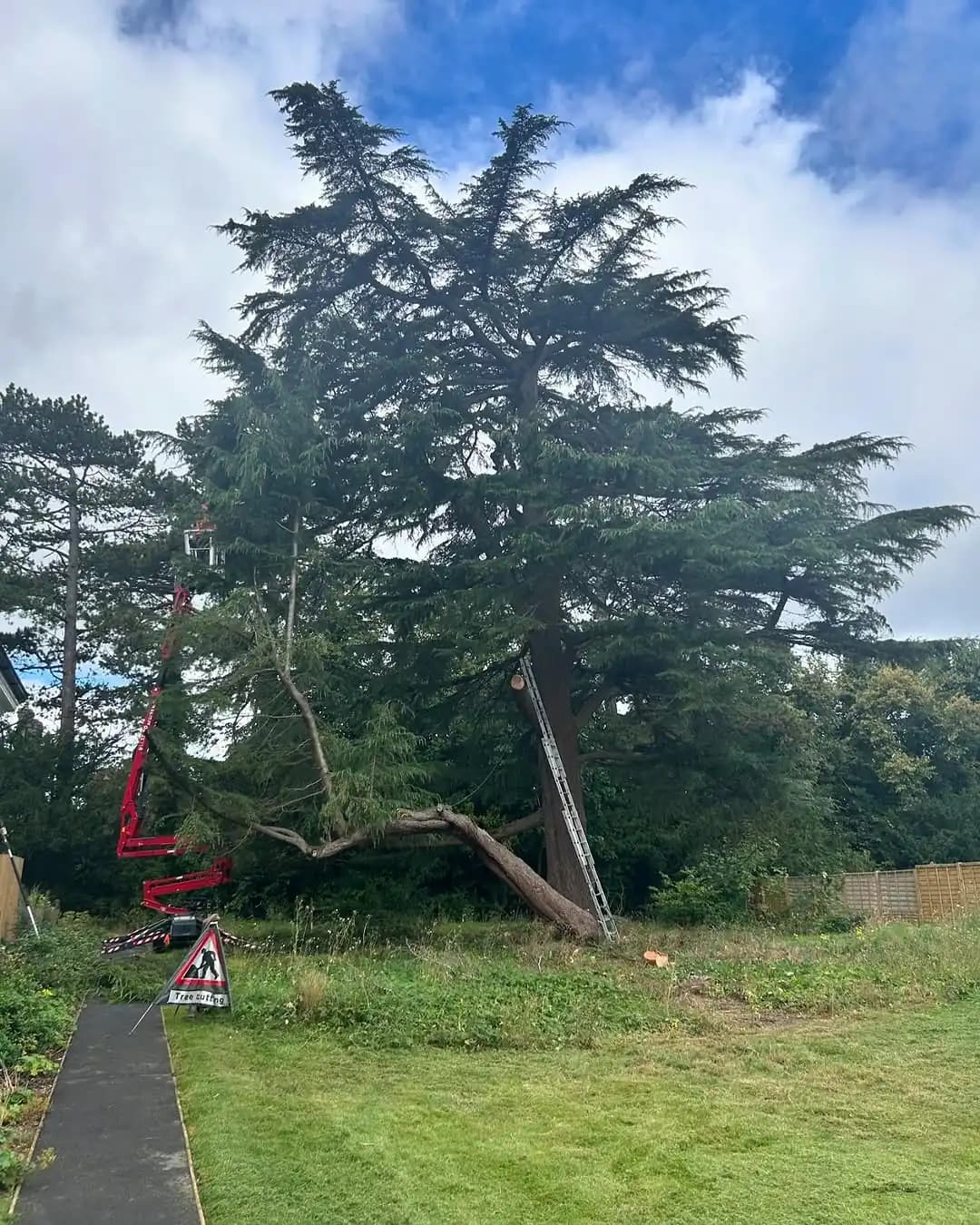
Storm damage has a way of making every tree issue feel immediate. A tree that was part of the background yesterday can suddenly be across a drive, leaning into another tree, sitting on a fence, or hanging in a way that makes the whole site feel unsafe.
In places like Midhurst and Petworth, where you get a mix of mature trees, exposed ground, older properties, and rural access routes, storm damage can be especially awkward. The main thing to remember is that the first aim is not tidy-up for appearances. It is making the site safe and controlled.
The tree may not be finished moving
One of the reasons storm sites are dangerous is that what you can see is not always the full picture. A tree may have partly uprooted, a branch may be hung up under tension, or the weight may still be shifting through fencing, roofs, or neighbouring stems.
That is why the safest first response is usually:
- keep clear of the affected area
- stop people walking beneath or near it
- avoid trying to cut it up yourself
- get the site assessed before making more movement likely
This is especially important where there is a lifted root plate or a large stem that has not fully settled.
Windthrow and partial failure create awkward jobs
Not all storm damage looks dramatic, but it can still be serious. Common scenarios include:
- a whole tree uprooted across a garden or drive
- a large limb torn out and left suspended
- a leaning tree that has shifted but not fully fallen
- crown damage that has left broken timber hanging
- a tree tangled into a neighbouring canopy
Each of those needs a different approach. The danger comes when people treat every storm job as though it can be solved with the same quick cut.
Access routes often become the urgent issue
In rural and semi-rural areas, access can be half the problem. A fallen tree may block:
- an entrance road
- a farm or estate track
- a driveway
- access to outbuildings
- visibility at a junction or boundary
In those cases, the first phase of work may be about reopening access safely rather than completing every part of the tidy-up in one go.
Buildings and structures change the plan
Storm-damaged trees are often resting on something when we arrive:
- a roof
- a conservatory
- fencing
- a garage
- a parked vehicle
That changes how the work needs to be handled. The goal is not simply to remove timber quickly. It is to take the weight off in a controlled way so the structure beneath is not hit with a worse shock during the clear-up.
Why hung-up timber is so risky
One of the most deceptive storm situations is a branch or crown section that appears to have come to rest safely when it is actually trapped under pressure. Cutting without understanding where the load is sitting can release that force suddenly.
For homeowners, the important thing is not the exact mechanics. It is understanding that storm-damaged timber can behave unpredictably, which is why calm assessment matters so much before anyone starts work.
The job is usually a sequence
Good storm response tends to follow a simple logic:
- assess what is unstable
- establish where people should not go
- reduce the immediate danger
- clear access where necessary
- continue dismantling in a controlled way
- tidy and review the wider site afterwards
That may sound obvious, but it is the difference between a safe response and a rushed one.
Neighbouring trees may need checking too
After high winds, the failed tree is not always the only problem. Nearby trees may have:
- damaged unions
- cracked limbs
- fresh lean
- disturbed roots
- new deadwood in the crown
That is why a quick follow-up look at the surrounding trees can be worth doing once the immediate emergency is under control.
Prevention still matters
No one can prevent every weather-related failure, but some storm jobs are made worse because the tree had clear warning signs before the weather arrived. Over-extended limbs, weak unions, heavy deadwood, or a visibly declining tree near a target area are all reasons to be proactive.
That is often what sensible maintenance is really for. It reduces the odds that one bad weather event turns into a full emergency.
What to do after a storm
If a tree has come down or become unstable after bad weather in Midhurst, Petworth, or the wider area, the most useful steps are:
- keep people away from the affected tree
- avoid standing beneath damaged limbs
- do not start cutting just to "get it sorted"
- photograph the situation if needed
- get the tree assessed so the safest clearance plan can be made
Storm damage is stressful enough without turning it into a second problem. The right response is usually calmer and more controlled than people expect. For urgent help across the county, the emergency tree surgeon Sussex page has contact details and what to expect from the first call.
What Happens After Storm Damage
The priority after storm damage is not clearing up for appearances. It is understanding what is still moving or under tension before anyone goes near it. The right sequence matters more than speed.
When To Pick Up The Phone
- When a tree or limb has come down after a storm
- When access to your property is blocked or restricted
- When something is still hanging or looks unstable
Useful Next Pages
Need Advice On A Tree?
Practical help for Sussex and Surrey properties
If you are trying to work out whether a tree needs pruning, reduction, removal, or just sensible advice, Capel can look at the site and tell you what makes sense.
Guides like this are written and checked in-house by people who actually do the work. See our editorial policy for how we keep them accurate.