Quick Summary
Good tree work is not just about cutting branches back. It protects safety and helps mature trees stay an asset rather than a recurring problem.
For a lot of people, tree surgery sounds like something you only arrange when there is an obvious problem. A branch has snapped, a tree is blocking light, or something has become too overgrown to ignore. That is understandable, but it misses the wider point. Good tree work is often about preventing bigger problems, not just reacting once they have already become expensive, dangerous, or stressful.
Across Sussex and Surrey, we see the same pattern regularly. A customer lives with an awkward tree for years because it is "not quite bad enough" to deal with yet. Then one storm, one growth spurt, or one neighbour complaint later, it becomes urgent. In many cases, a sensible pruning visit earlier would have made the whole situation easier.
Tree surgery is really about management
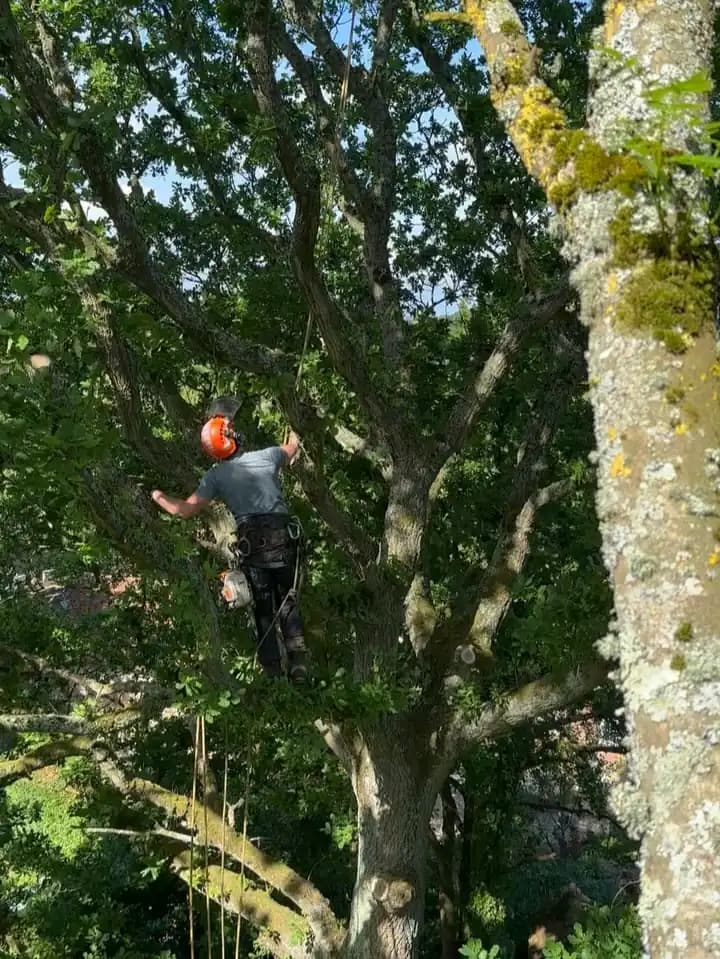
The phrase "tree surgery" can make it sound like one single job. In reality, it covers a range of work: crown reduction, stump grinding, emergency call-outs, and more. Good tree work helps trees and sites function better over time. That might mean crown reduction, lifting low branches, removing deadwood, dealing with storm damage, grinding out an old stump, or taking down a tree that is simply no longer right for the space.
The benefit is not only in the cut itself. The benefit is in what the work allows the property owner to avoid or improve afterwards.
That might include:
- reducing risk around the house, driveway, road, or garden
- improving light in dark spaces
- keeping access clear for vehicles and pedestrians
- stopping a manageable problem turning into an urgent one
- helping a mature tree sit better within the size of the property
Safety is usually the biggest hidden benefit
People often ring up because a tree looks untidy, but after a site visit the bigger concern turns out to be safety. A long heavy limb over a drive, a stem rubbing on a roofline, low branches across a path, or obvious deadwood above a garden seating area may all feel like "just one of those things" until the weather turns.
Regular maintenance reduces the chances of that kind of surprise. It is not about stripping trees back aggressively. It is about spotting what is weak, awkward, over-extended, or no longer sensible for the location and dealing with it before the problem starts making decisions for you.
That is especially relevant around homes with:
- parked vehicles beneath mature trees
- children using the garden regularly
- branches over sheds, garages, roofs, or conservatories
- older trees that have not been professionally managed for some time
Better light and a more usable garden
Another major benefit is how much difference the right pruning can make to the feel of a property. A garden can become gloomy or closed in without the owner necessarily realising how much the trees are contributing to it. Likewise, a patio, lawn, or driveway can feel permanently damp or awkward because of overhanging growth.
Good pruning does not need to ruin the tree to improve the space. Sometimes a crown reduction, a crown lift, or selective thinning is enough to make a garden feel more open and usable again. The key is knowing what outcome you want:
- more daylight into the house
- better clearance above a drive or walkway
- less overhang onto neighbouring land
- a tidier and more balanced shape
- a tree that feels more in proportion to the setting
When it is done properly, the tree still looks natural. The space just works better afterwards.
Protecting the value of the property
Well-kept trees can absolutely add character and appeal to a home. Poorly managed trees do the opposite. They can make a garden feel neglected, create worry for buyers, and raise questions about future costs and risk.
That does not mean every garden needs manicured specimen trees. It simply means that if a tree is a visible part of the property, it should feel intentional rather than unmanaged. Buyers and neighbours notice the difference quickly.
Professional tree work helps in situations such as:
- keeping prominent front-garden trees neat and balanced
- preventing hedges and boundaries from swallowing space
- removing old stumps that make a garden feel unfinished
- keeping larger trees from dominating a modest-sized plot
It is less about a dramatic "before and after" and more about making the property feel cared for.
Preserving trees that are worth keeping
One of the most useful benefits of proper tree surgery is that it often avoids unnecessary removal. A lot of customers assume the only realistic answer is to fell a tree because it feels too large, messy, or awkward. Sometimes removal is the right call, but often a tree can be retained with the right management.
That might mean:
- reducing a canopy that has outgrown the space
- removing lower limbs that are causing access problems
- clearing dead or damaged sections
- managing a tree on a maintenance cycle so it does not keep becoming a crisis
For people who like the character of mature trees but need them to work better in a domestic setting, that can be the best outcome by far.
Saving money by avoiding bigger jobs later
Preventative work is usually easier and cheaper than emergency work. That is true in plenty of trades, and it is true here as well.
A tree that is checked and managed at the right time is less likely to produce:
- a sudden storm emergency
- heavy damage to a fence, vehicle, or outbuilding
- access problems that hold up other work
- a more expensive dismantle after years of neglect
This does not mean every tree needs constant attention. It means that sensible maintenance on the right trees can prevent a much messier bill later.
Helping other jobs move forward
Tree work is often tied to something else. A customer may be planning to:
- replace fencing
- lay a new driveway or patio
- build an extension
- replant part of the garden
- clear space after removing an old tree
In those cases, the benefit of tree surgery is not just the tree itself. It is the fact that the wider project can move forward properly. A stump no longer blocks the fence line. Low limbs no longer interfere with scaffold access. Overgrown branches no longer drag the whole site into a compromise.
This is one of the most practical reasons people book tree work, and one of the least talked about.
The right advice matters as much as the cutting
One of the biggest differences between useful tree work and disappointing tree work is whether the job starts with the right recommendation. Customers do not need to know the exact pruning term before they call. They need someone to look at the tree, understand the site, and explain what makes sense in plain language.
That is what turns tree surgery from "someone with a saw" into a genuinely valuable service. The right advice can stop you:
- paying for the wrong job
- removing too much from a tree that could have been retained
- leaving a site half-finished
- creating a maintenance problem rather than solving one
A tree should feel like an asset, not a problem
At its best, professional tree surgery helps mature trees stay part of what makes a property attractive. It reduces worry, improves usability, and keeps the site looking better cared for. In some cases it is about safety. In others it is about space, light, access, or getting another job moving. Usually it is a mixture of several of those at once.
If you have a tree, hedge, or stump on your property in Sussex or Surrey and you are unsure what the right next step is, the best place to start is not with jargon. It is with a proper assessment of the site, the tree, and what you actually need the space to do.
Why Proper Tree Work Is Worth The Investment
Good tree surgery prevents problems rather than just responding to them. A well-maintained tree is safer, less likely to fail, and often more valuable to the property than one that has been ignored until something goes wrong.
When To Pick Up The Phone
- When a tree is getting larger than the space it is in
- When you want to check the condition of mature trees on your property
- When previous work has left the tree looking wrong or poorly pruned
Useful Next Pages
Need Advice On A Tree?
Practical help for Sussex and Surrey properties
If you are trying to work out whether a tree needs pruning, reduction, removal, or just sensible advice, Capel can look at the site and tell you what makes sense.
Guides like this are written and checked in-house by people who actually do the work. See our editorial policy for how we keep them accurate.