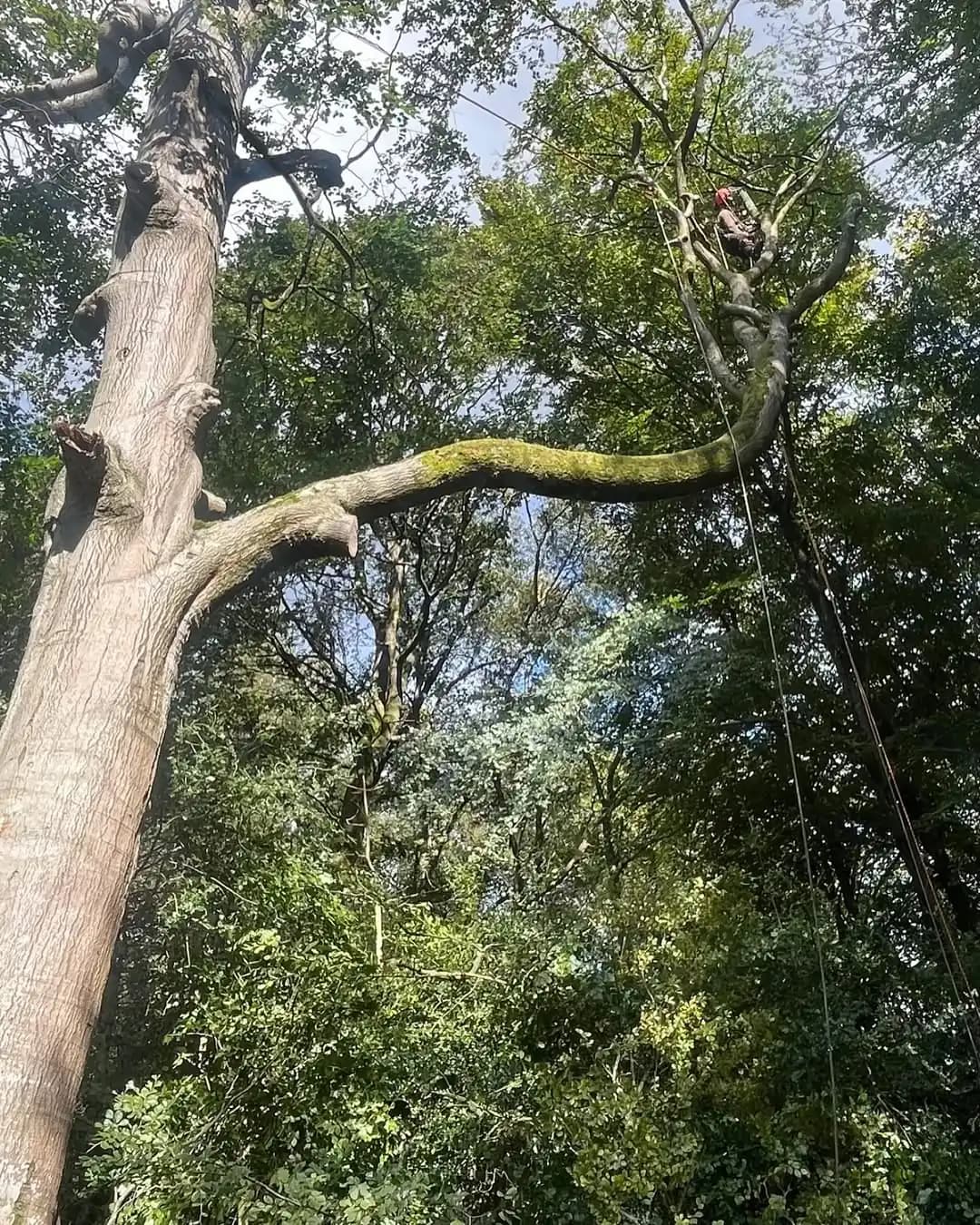
Quick Summary
Crown reduction is often the right answer for a tree that's outgrown its space. Done properly, it keeps the tree natural-looking and easier to live with.
When people say a tree "needs cutting back", crown reduction is often the job they are actually talking about. It is one of the most common services we discuss across Sussex and Surrey, and also one of the easiest to misunderstand.
Crown reduction is not about hacking the top off a tree or cutting everything back hard in one go. It is a controlled way of reducing the overall size and reach of the canopy while keeping the tree balanced, healthy-looking, and appropriate for the site.
For many property owners, it is the difference between keeping a tree that has become too dominant and feeling like the only option is tree removal.
What crown reduction is supposed to do
The purpose of crown reduction is simple: make the crown smaller and lighter in a way that still suits the tree.
That can help when:
- branches are stretching too far over a house, garage, fence, or road
- a tree has become too large for the garden
- heavy limb growth is starting to feel over-extended
- the tree is blocking too much light
- the owner wants to retain the tree but needs it better contained
The aim is not to butcher the tree into a shape it would never naturally have. It is to reduce the canopy while preserving its structure and appearance as much as possible.
Why people ask for it
Most customers do not start with the phrase "crown reduction". They say things like:
- "It is getting too big."
- "The branches are too close to the house."
- "The garden is getting darker every year."
- "It feels too heavy over that side."
- "We want to keep it, but it needs bringing under control."
That is why the value of crown reduction is not just technical. It solves a very common domestic problem: a tree that is still worth having, but no longer feels comfortable in the space.
It can reduce risk without removing the tree
One of the biggest reasons crown reduction matters is that it can lower the amount of weight and leverage in the outer canopy. That is especially relevant on longer limbs, exposed sides, and trees that have started reaching well beyond the main footprint of the garden.
This does not make a tree "storm proof", and it should never be sold that way. But it can:
- lessen the load on over-extended branches
- make the tree feel more balanced
- reduce the chance of nuisance from overhang
- improve clearance around buildings and boundaries
For some mature trees, that creates a far better outcome than full removal, particularly where the tree still has value in the landscape.
Better light, better space, better proportion
Another major benefit is the difference it can make to the day-to-day feel of the property. A reduction can open up more sky, improve light into the garden or house, and stop the tree feeling so visually heavy.
This matters a lot more than people sometimes realise. A large canopy can make:
- a lawn feel permanently shaded
- a patio cold and damp
- windows darker inside the house
- a garden feel smaller than it is
In those situations, crown reduction is often less about tree drama and more about restoring balance between the tree and the way the owner uses the space.
Good reduction should still look natural
One of the easiest ways to spot bad crown reduction is when the tree no longer looks like itself afterwards.
Poor work can leave a tree:
- harshly lopped
- flat-topped
- cut back to stubs
- badly unbalanced
- full of awkward regrowth points later on
That is not what a proper reduction should look like. A good job should still leave the tree with a coherent, natural outline. The difference should be obvious in how the tree sits within the space, but it should not look mutilated.
Why topping is not the same thing
A lot of disappointment comes from people assuming any major pruning is crown reduction. It is not.
Topping or aggressive lopping usually means large sections are removed indiscriminately with very little regard for structure, shape, or future growth. It can leave the tree stressed, unattractive, and prone to weak regrowth.
Crown reduction, by contrast, is supposed to be thoughtful and selective. It is about where cuts are made, how much is taken, and whether the final result still respects the tree.
If the only visible goal is "make it smaller at any cost", the quality of the result usually suffers.
Not every tree needs reduction
It is also worth saying that crown reduction is not always the right answer. Sometimes the better solution is:
- crown lifting, if the problem is low branches rather than size
- deadwood removal, if the main issue is obvious dead material
- selective pruning, if there is only one awkward limb
- full removal, if the tree is completely wrong for the setting
- no work at all, if the concern is mostly cosmetic and the tree is not causing a real problem
That is why the decision should always start with the actual issue on site, not just the assumption that "it needs cutting back".
Mature trees often benefit from thoughtful reduction cycles
Some larger trees in domestic settings are not one-off jobs. They may need to be managed over time if they are to remain suitable for the site.
That does not mean constant pruning. It means that for certain trees, particularly where space is limited, a sensible reduction every few years can be a more stable and attractive approach than leaving the tree too long and then trying to correct everything in one heavy-handed visit.
This is especially true where:
- a tree is close to the house
- the crown expands quickly between maintenance visits
- neighbours are affected by overhang or shade
- the owner wants the tree kept within a practical envelope
The real value is in keeping good trees workable
The most important thing about crown reduction is that it gives property owners a middle ground. You do not always have to choose between "leave it alone" and "take it down". When a tree still has value but has become too much for the space, reduction can often be the most sensible route.
That is why it matters. It helps retain character, shade, and maturity where those things are still wanted, while dealing with the genuine problems that come with an oversized canopy.
If you have a tree in Sussex or Surrey that has become too large, too dark, too dominant, or too heavy over one side of the property, crown reduction may be the right discussion. The key is making sure the work is planned around the tree and the site, not treated like a blunt one-size-fits-all cut.
When Crown Reduction Is The Right Answer
Crown reduction is not simply making the tree smaller. It is managing the canopy in a way that solves a specific problem without leaving the tree looking wrong. The right approach depends on the species, the site, and what the problem actually is.
When To Pick Up The Phone
- When the tree is blocking light or overhanging the roof or boundary
- When you want a measured reduction rather than a full removal
- When you need advice on what the tree can realistically give up
Need Advice On A Tree?
Practical help for Sussex and Surrey properties
If you are trying to work out whether a tree needs pruning, reduction, removal, or just sensible advice, Capel can look at the site and tell you what makes sense.
Guides like this are written and checked in-house by people who actually do the work. See our editorial policy for how we keep them accurate.