Quick Summary
Professional tree pruning guide. Learn how targeted crown reductions, thinning, and pruning improve tree safety, shape, and light in Sussex & Surrey.
People often use the word "pruning" as though it means one thing. If you are already clear on what you need, the tree surgery services page lists all the main jobs. In reality, it covers a whole range of different jobs. Sometimes it is about making a tree safer. Sometimes it is about shape, light, access, or keeping a mature tree manageable in a domestic space.
That is why good pruning starts with a simple question: what problem is this meant to solve? Without that, even technically tidy cutting can still be the wrong job.
Pruning should have a clear purpose
A tree does not benefit from being cut just because it has not been touched for a while. Pruning is most useful when there is a proper reason behind it.
That reason might be:
- low branches affecting access
- overhang near a house or boundary
- deadwood in the crown
- a canopy becoming too large for the space
- the need to improve light without removing the tree
- a previous poor pruning job that needs correcting carefully
Once the actual goal is clear, the type and extent of pruning become much easier to judge.
The main pruning jobs people usually mean
In domestic tree work, most enquiries end up falling into a few familiar categories. The separate guides on crown lifting and crown reduction go deeper on each of those.
Crown lifting
This is about raising the clearance underneath the canopy by removing or shortening lower growth. It is useful where branches are too low over drives, paths, lawns, or seating areas.
Crown reduction
This reduces the overall size and spread of the canopy. It is usually the right discussion when the tree has become too dominant, too heavy, or too large for the space.
Deadwood removal
This deals with dead, damaged, or unsafe material within the crown. It can improve safety and appearance without meaningfully changing the size of the tree.
Selective pruning
Sometimes the problem is not the whole tree. It is one awkward limb, one area of overhang, or one section that needs careful attention.
Understanding those differences matters because not every tree problem needs the same type of cut.
What good pruning should achieve
A good pruning job should leave the tree:
- safer or more manageable
- more appropriate for the site
- still recognisable and natural in shape
- less likely to create the same issue again immediately
It should also leave the property owner feeling that the problem was actually solved, not just cosmetically hidden for a short time.
What poor pruning often looks like
Most people can spot bad tree work even if they do not know the technical name for it. The tree looks harsh, unbalanced, or stripped in a way that feels wrong.
Common signs of poor pruning include:
- the canopy cut back to blunt stubs
- one side taken far harder than the other
- lots of inner growth stripped out with heavy weight left at the ends
- too much removed in one visit
- a tree left looking unnatural and stressed
This is where disappointment usually starts. The owner wanted the tree improved, but instead it now looks butchered or set up for more problems later.
Trees need different answers in different settings
The right pruning approach depends heavily on where the tree is and what surrounds it.
A front-garden tree over a driveway needs different thinking from:
- a boundary tree overhanging the neighbour
- a rear-garden specimen blocking light
- a roadside tree affecting access
- a mature tree near outbuildings or fences
That is why the site matters so much. The same species can need a different approach depending on what the tree is actually doing in that location.
Homeowners usually care about outcomes, not jargon
Customers do not usually ring up asking for "selective canopy management". They say:
- "It is too close to the roof."
- "The branches are too low."
- "It is getting too big for the garden."
- "We have lost loads of light."
- "Something dead is hanging up there."
That is exactly how the conversation should start. The pruning method comes afterwards, once the site has been understood.
Timing matters, but not as much as people think
People often worry about finding the perfect month for pruning. Timing does matter in some cases, but the more important point is usually whether the work is sensible, proportionate, and needed.
Some jobs can wait for a better window. Others should not be delayed if safety is involved. The best timing depends on:
- the species
- the type of work needed
- whether the issue is urgent
- how the tree is currently performing
What matters most is that the work is planned rather than carried out casually.
Pruning should fit into long-term management
Some trees only need occasional attention. Others, especially those in tighter domestic settings, are better managed over time.
That does not mean constant interference. It means recognising that if a tree repeatedly outgrows its space, a sensible maintenance cycle may produce a far better result than leaving it too long and then trying to correct everything with one hard cut.
For the property owner, that often means:
- better shape over time
- less shock to the tree
- fewer dramatic interventions
- a more stable relationship between the tree and the site
The best pruning is often the least dramatic-looking
One of the easiest mistakes is assuming more cutting means a better result. In reality, the most successful pruning jobs are often the ones where the tree still looks good afterwards and the improvement is felt in the space rather than shouted by the cuts.
You notice:
- better light
- more clearance
- less overhang
- a tidier, more balanced feel
but the tree still belongs there.
Start with the real issue, not the pruning term
If you are not sure what your tree needs, that is normal. The best place to start is simply identifying what is wrong:
- too low
- too large
- too dark beneath
- too close to something
- obviously dead in parts
- awkward after a previous bad cut
From there, the right pruning approach becomes much easier to work out.
That is what good tree work is really about. Not showing off terminology, but solving the real problem in a way that still respects the tree and suits the property.
The Practical Side Of Tree Pruning
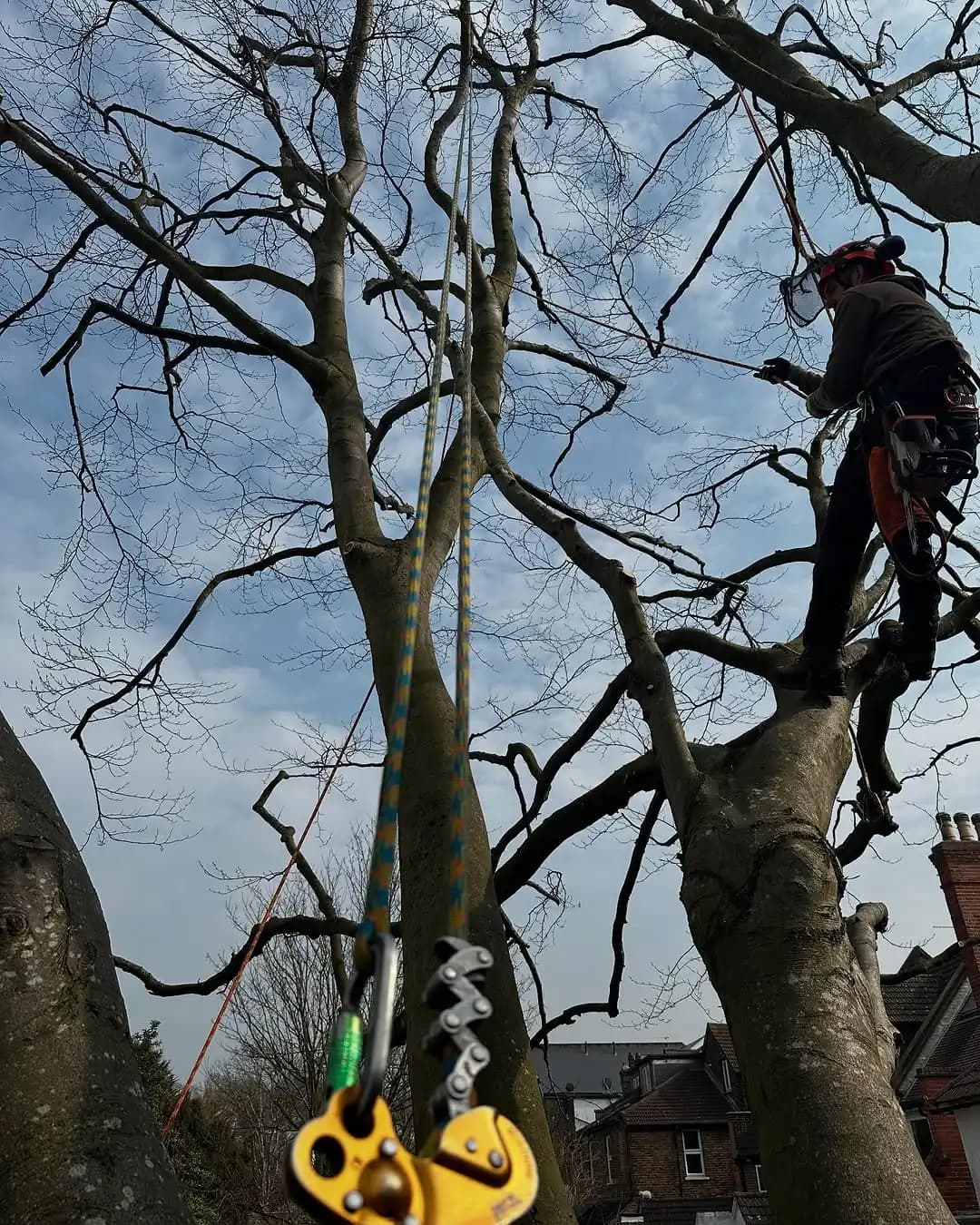
Good pruning starts with understanding the problem. Whether that is too much shade, an overhanging branch, a large canopy close to a roof, or crown weight creating a risk, the pruning approach should be matched to the actual issue.
When To Pick Up The Phone
- When a tree needs pruning but you are not sure what type of work is right
- When previous pruning has left the tree looking poor or unbalanced
- When you want advice on what can actually be done without harming the tree
Useful Next Pages
Need Advice On A Tree?
Practical help for Sussex and Surrey properties
If you are trying to work out whether a tree needs pruning, reduction, removal, or just sensible advice, Capel can look at the site and tell you what makes sense.
Guides like this are written and checked in-house by people who actually do the work. See our editorial policy for how we keep them accurate.