Quick Summary
What stump grinding actually costs across Sussex and Surrey, and why the stump matters more than the tree it's left behind.
A lot of tree jobs do not really feel finished once the tree has been removed. This is especially true across Sussex and Surrey, where gardens tend to be tighter and the stump ends up right where the next project needs to start. The trunk may be gone, the branches chipped, and the site tidied, but the stump is still sitting there in the middle of the lawn, right on the fence line, or exactly where the next stage of work needs to happen.
That is why stump grinding matters. It is not a cosmetic add-on. In many gardens across Sussex and Surrey, it is the part that turns a half-finished tree removal into a site that is genuinely usable again.
Why stumps cause more trouble than people expect
At first, a stump can feel like something you can work around. Then real life gets in the way.
The stump may:
- block a new fence line
- sit in the middle of a lawn you want level
- make paving, decking, or turfing awkward
- produce regrowth or shoots
- create an obvious trip point
- leave the garden looking unfinished long after the main job is done
This is especially common when a tree was removed for safety or access reasons but the follow-on work still needs a clean site to continue.
Grinding is usually the most practical answer
People sometimes imagine the only thorough way to deal with a stump is to dig the whole thing out. In practice, that can be far more disruptive than they expect. Full excavation may mean a large hole, more damage to the surrounding ground, and more disturbance to paths, edging, or nearby planting.
Grinding is usually the more practical option because it deals with the stump below ground level without turning the whole area into a bigger reconstruction job.
That makes it a strong choice for:
- domestic gardens
- tighter access properties
- sites with nearby fences or walls
- areas that need reusing quickly afterwards
What stump grinding actually does
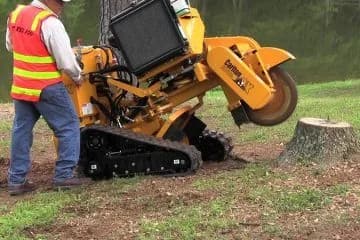
Stump grinding uses specialist machinery to grind down the remaining stump into woodchip below the surface. The exact depth and finish depend on what the area needs next.
For example:
- if the plan is to turf or reseed, the area needs a clean and level finish
- if fencing is going in, the stump needs to stop obstructing the line of work
- if replanting is planned, the grind needs to be appropriate for that next use
- if the aim is simply to remove a visible nuisance, the finish still needs to look tidy and deliberate
The important point is that the stump is not just shaved at the top and forgotten. The job should leave the area more workable afterwards.
It is often the missing final step after tree removal
One of the most common situations we see is a tree that came down months or even years ago, but the stump was left because it felt less urgent at the time. Then the owner decides to improve the garden, replace the fence, lay a shed base, or simply tidy the space properly and the stump becomes the thing holding everything up.
That is why stump grinding is so often linked to:
- old tree removals
- hedge clearance projects
- new patios, paths, and lawns
- replacement fencing
- general garden redesigns
It is one of those jobs that can have an outsized effect on the rest of the site.
Access is usually the question behind the question
Many stump enquiries are really access enquiries in disguise. The customer wants to know if the machinery can get to the stump without wrecking the garden or whether the location is too awkward to deal with.
That matters a lot in towns and villages where:
- side returns are narrow
- rear gardens are enclosed
- there are steps, gates, or tight turns
- stumps sit close to sheds, conservatories, or boundaries
A good stump grinding service is not just about owning the machine. It is about turning up, assessing the access honestly, and planning the job around the reality of the site.
Why people rarely want to keep the stump
There are exceptions, but most customers eventually reach the same conclusion: if the tree is gone, they do not really want the stump either.
That is because stumps have a habit of becoming:
- a visual reminder of an old problem
- a nuisance when mowing or trimming
- a stubborn obstacle to landscaping
- a source of regrowth
- something everyone keeps meaning to deal with later
Removing that obstacle often makes the whole garden feel more settled and usable again.
Grinding versus leaving it alone
There are situations where a stump can simply be left, especially in larger informal ground where appearance and access do not matter. But in most domestic settings, leaving it in place tends to create ongoing compromises.
You may end up:
- planting around it instead of where you actually wanted planting
- building a fence line around it
- living with an awkward patch in the lawn
- delaying work because one old stump is still in the way
Grinding is usually about removing that compromise.
It helps the next job start properly
This is one of the biggest practical benefits. A lot of site improvement work depends on the ground being clear enough to use. Once a stump is properly ground out, the space is much easier to:
- level
- replant
- fence
- pave
- seed
- redesign
That is why stump grinding is often not really a tree-only job. It is part of getting the wider site ready.
What to ask before booking stump grinding
If you are deciding whether to go ahead, the useful questions are usually:
- what needs to happen in the space afterwards?
- how tight is the access?
- is the stump close to walls, surfaces, or boundaries?
- do you want the grindings left for reuse or removed?
- is this tied to another job that needs the space clear?
Those answers matter more than jargon.
What does stump grinding cost?
Stump grinding cost varies more than people expect, because the job is really about the stump's diameter, how deep it needs to be ground, and how easy it is to get machinery to it. As a guide, the main things that move the price are:
- the diameter of the stump and how old or hard the wood has become
- how deep the grind needs to go for the next use of the space
- access for grinding equipment, including narrow side returns or enclosed gardens
- how many stumps are involved, since multiple stumps on one visit are usually more efficient than separate call-outs
- whether the grindings are left on site or removed and disposed of
A tree stump grinding service that gives a fixed price without seeing the stump or a clear photo is usually guessing. A short description or a couple of photos is normally enough to give a realistic cost before anyone visits, with the final price confirmed on site if access turns out to be different than expected. For how the same pricing logic applies to removals, crown work and everything else Capel does, see the full tree surgery cost guide.
A properly finished site feels different
The real value of stump grinding is simple. It removes the leftover problem that keeps getting ignored. Once the stump is gone below ground level and the area is left in a workable state, the garden or site usually feels much more finished.
If you have an old stump in Sussex or Surrey that is holding up fencing, turfing, planting, paving, or just the general usability of the space, stump grinding is usually the cleanest way to move on from it.
The Main Question Is What The Space Needs Next
Most stump enquiries are tied to another job. The stump is in the way of turf, paving, fencing, planting, or simply making the area usable again. That is why below-ground removal and tidy completion matter.
When To Pick Up The Phone
- When a stump is holding up fencing, paving, or replanting
- When shoots, roots, or an old stump are making the garden awkward to use
- When access is tight and the work needs the right machinery
Useful Next Pages
Need Advice On A Tree?
Practical help for Sussex and Surrey properties
If you are trying to work out whether a tree needs pruning, reduction, removal, or just sensible advice, Capel can look at the site and tell you what makes sense.
Guides like this are written and checked in-house by people who actually do the work. See our editorial policy for how we keep them accurate.