Ash Dieback Management
Ash dieback assessment and removal across Sussex and Surrey. Practical advice on whether the tree can stay, needs reducing, or has to come down.
What the job involves
Ash dieback, Chalara fraxinea, has been spreading through UK ash populations for years and most of the ash trees in Sussex and Surrey are affected to some degree. The practical question is usually not whether the tree has it, but how far it's progressed and what that means for the specific site. A thinning crown over a back garden is a different risk to a failing stem over a public footpath. We assess the condition, advise honestly on the realistic options, and plan the work around the tree's actual state rather than worst-case assumptions.
- Inspect the crown condition, structural integrity, and proximity to structures or public areas
- Give an honest assessment: monitor, reduce, make-safe, or remove
- If removal is needed, plan the work around the condition of the timber, brittle ash is more dangerous to dismantle than healthy wood
- Carry out the work in the safest practical sequence given the state of the tree
- Advise on replanting or follow-on clearance where appropriate
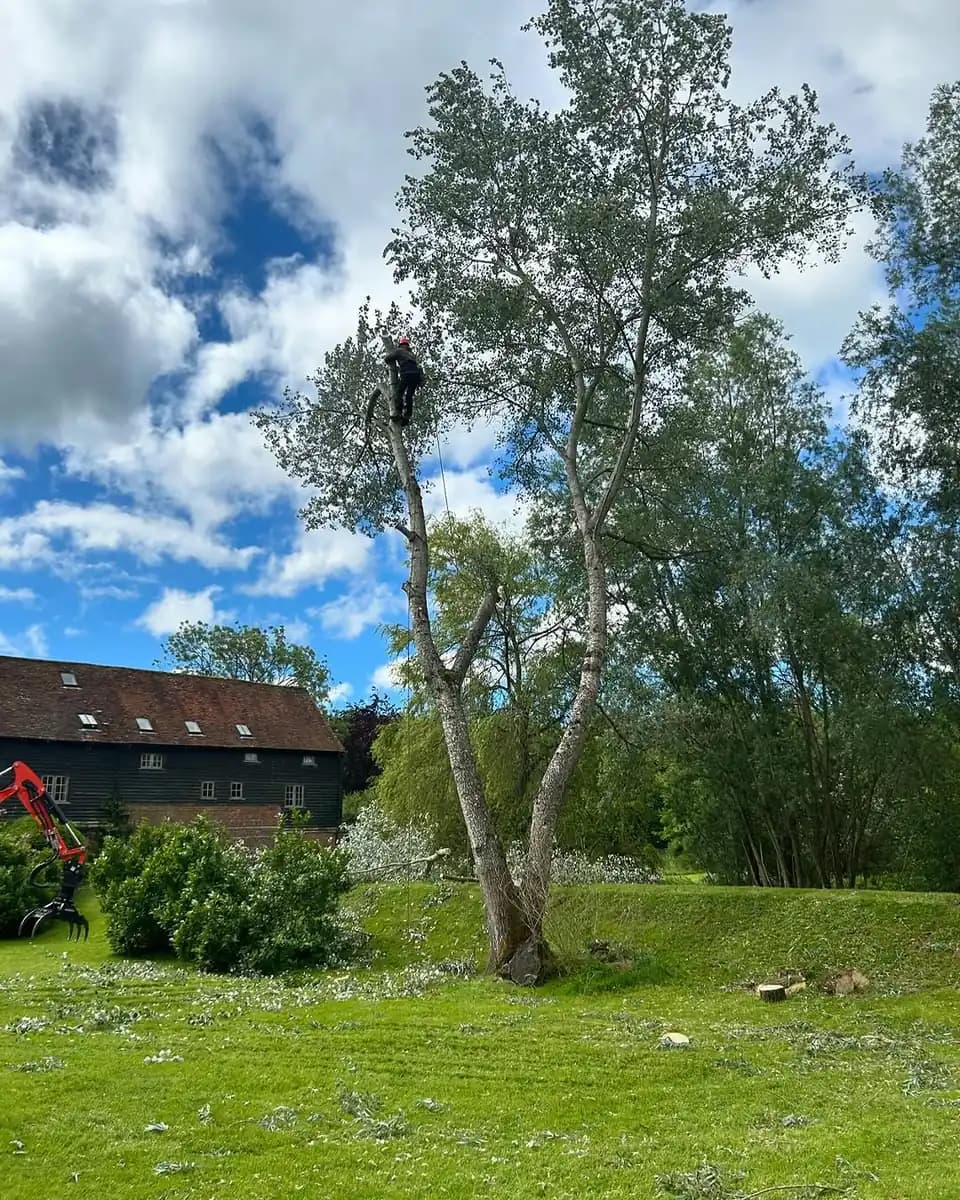
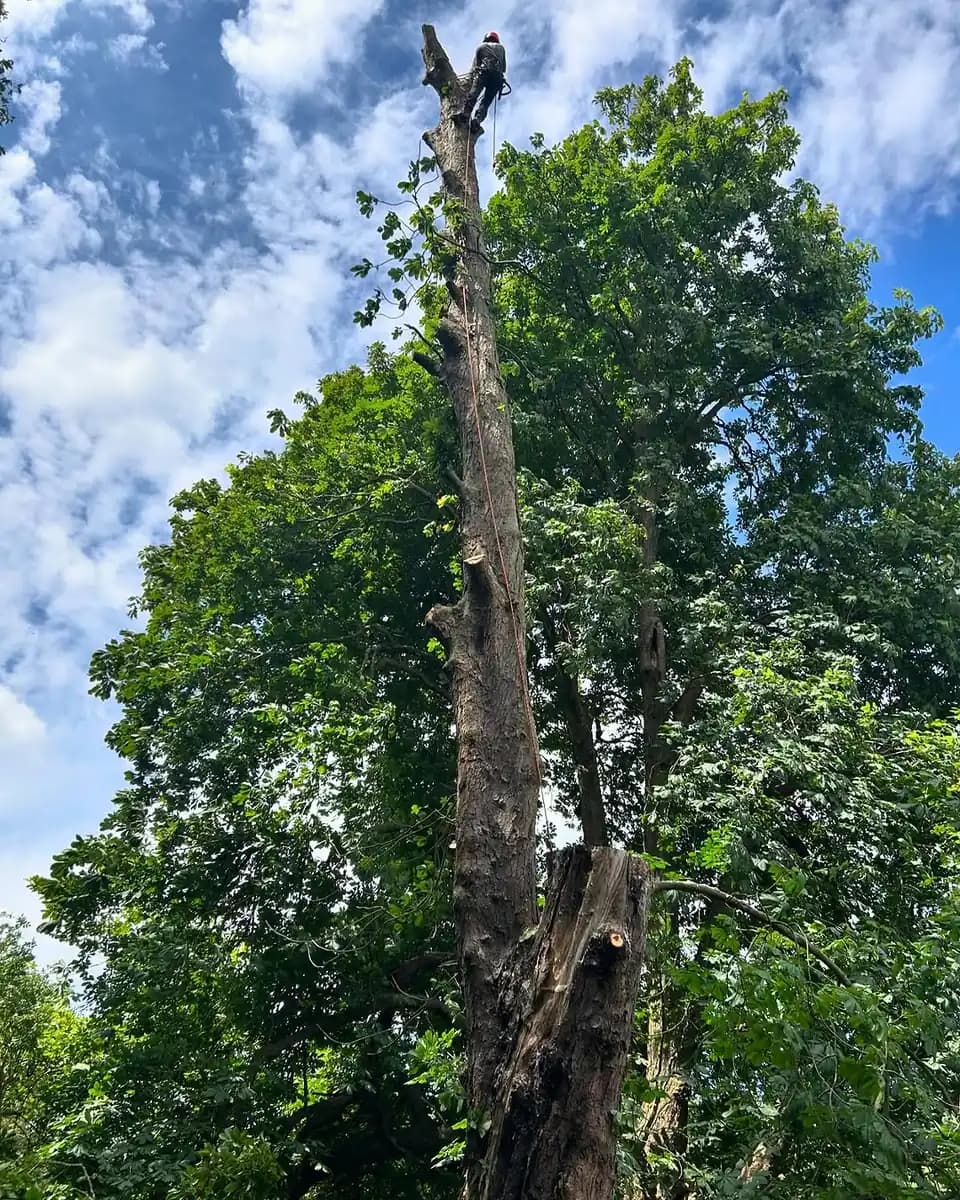
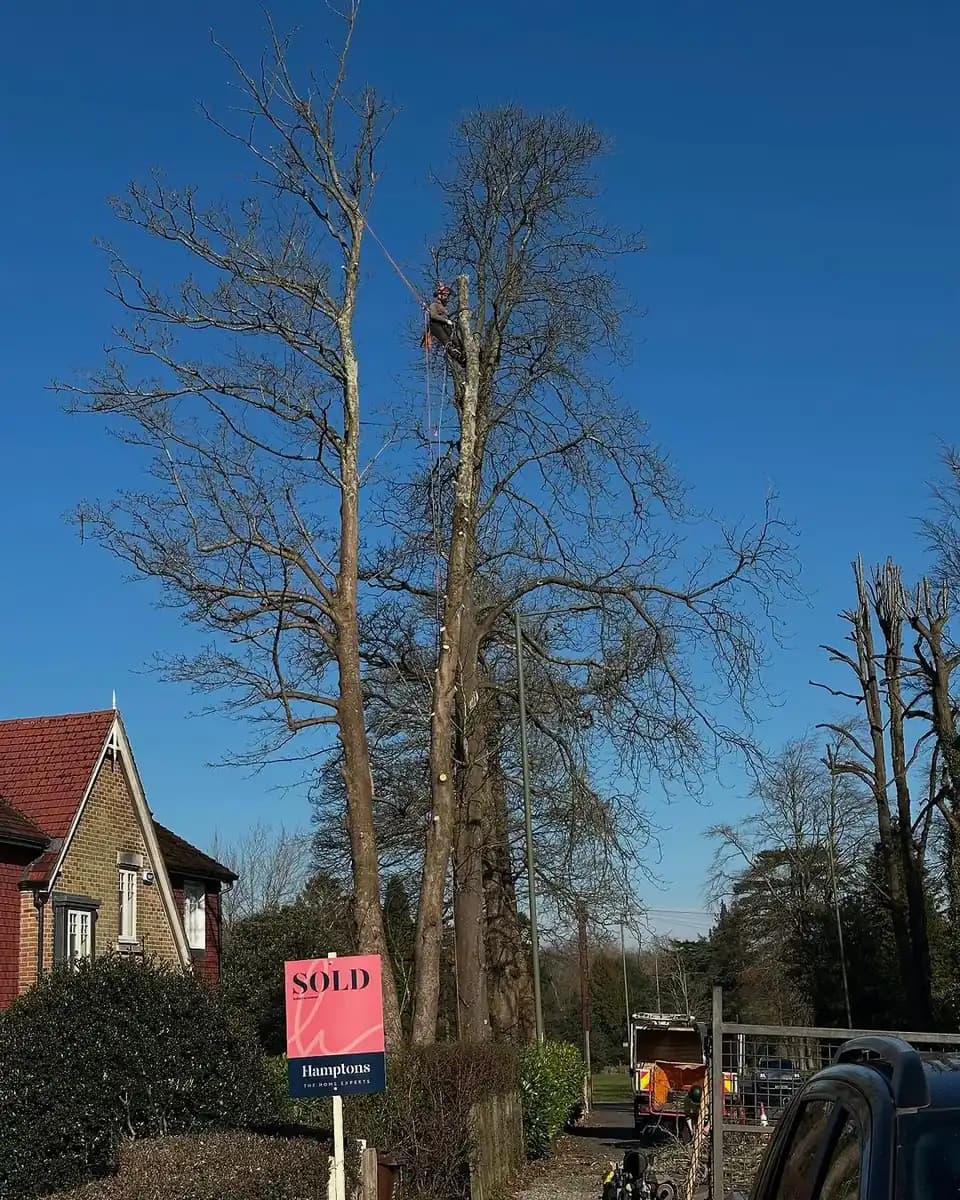
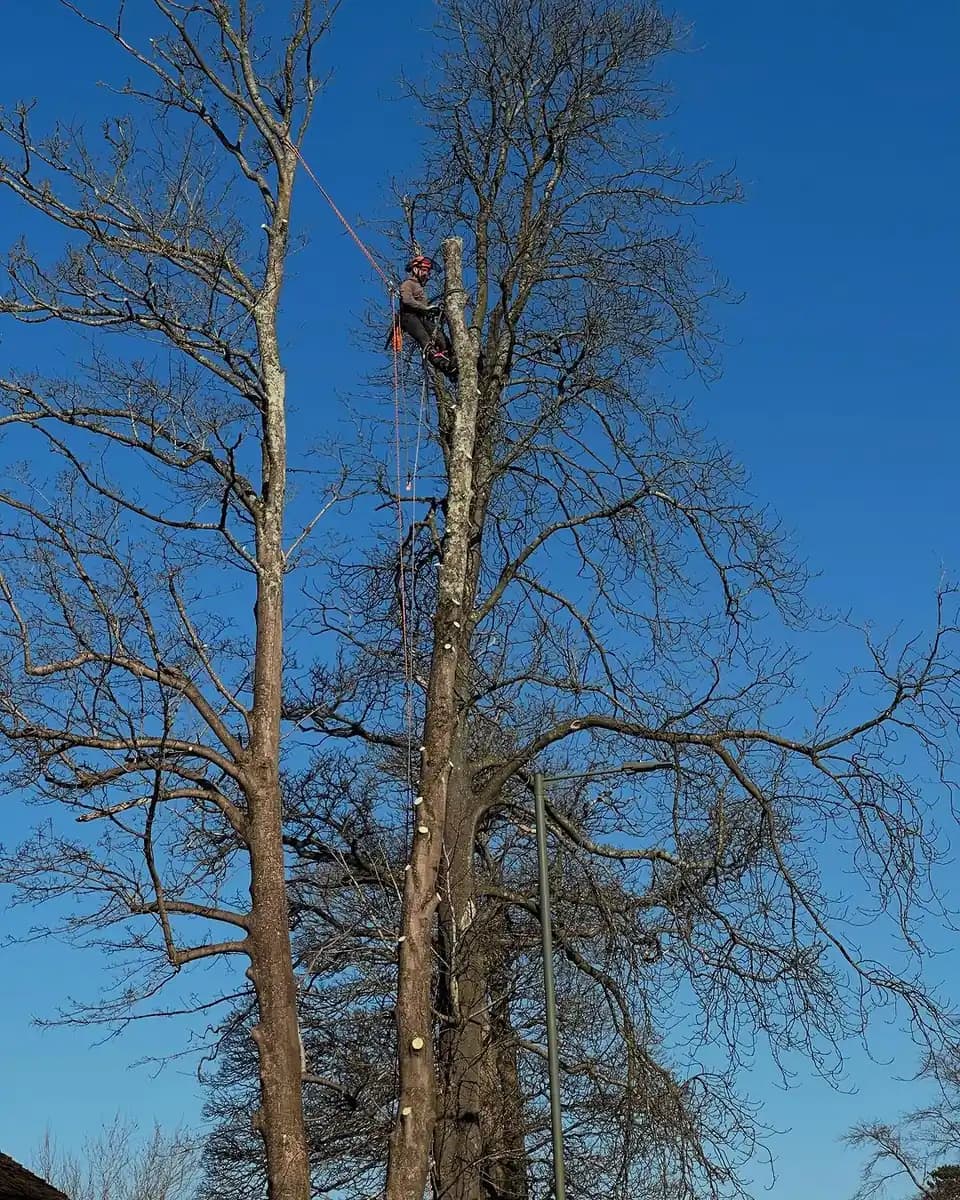
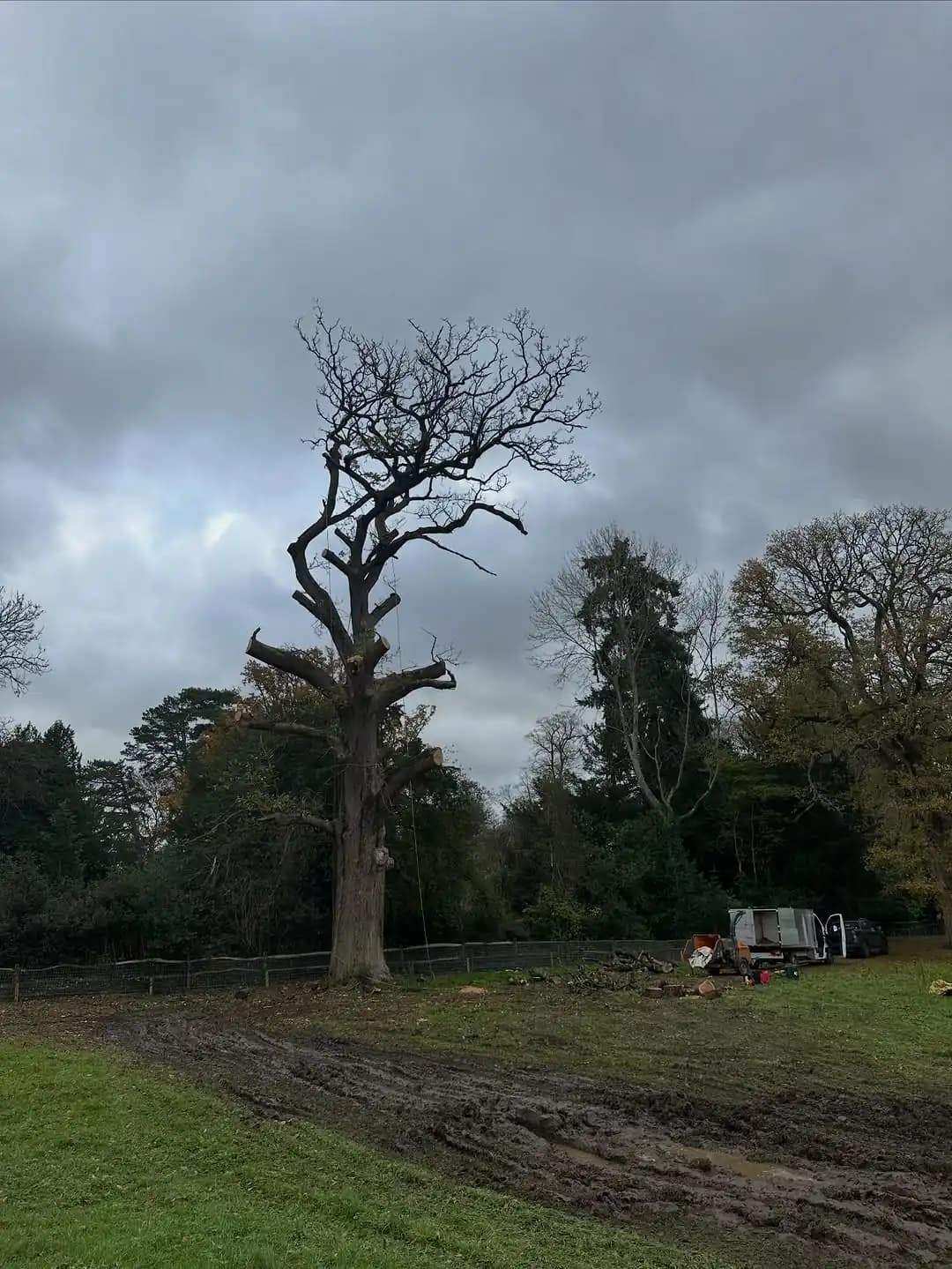
A client had four large ash trees in varying stages of decline. Two were manageable with careful crown reduction and monitoring. One needed staged removal because of structural failure risk near the boundary wall. The fourth was sound enough to leave for another two years. They got four different answers because they had four different trees.
Not sure what you need? Call Brad.
Tell him what the tree is doing. He will give you a straight answer on the best way to deal with it. No pitch.