Deadwood Removal
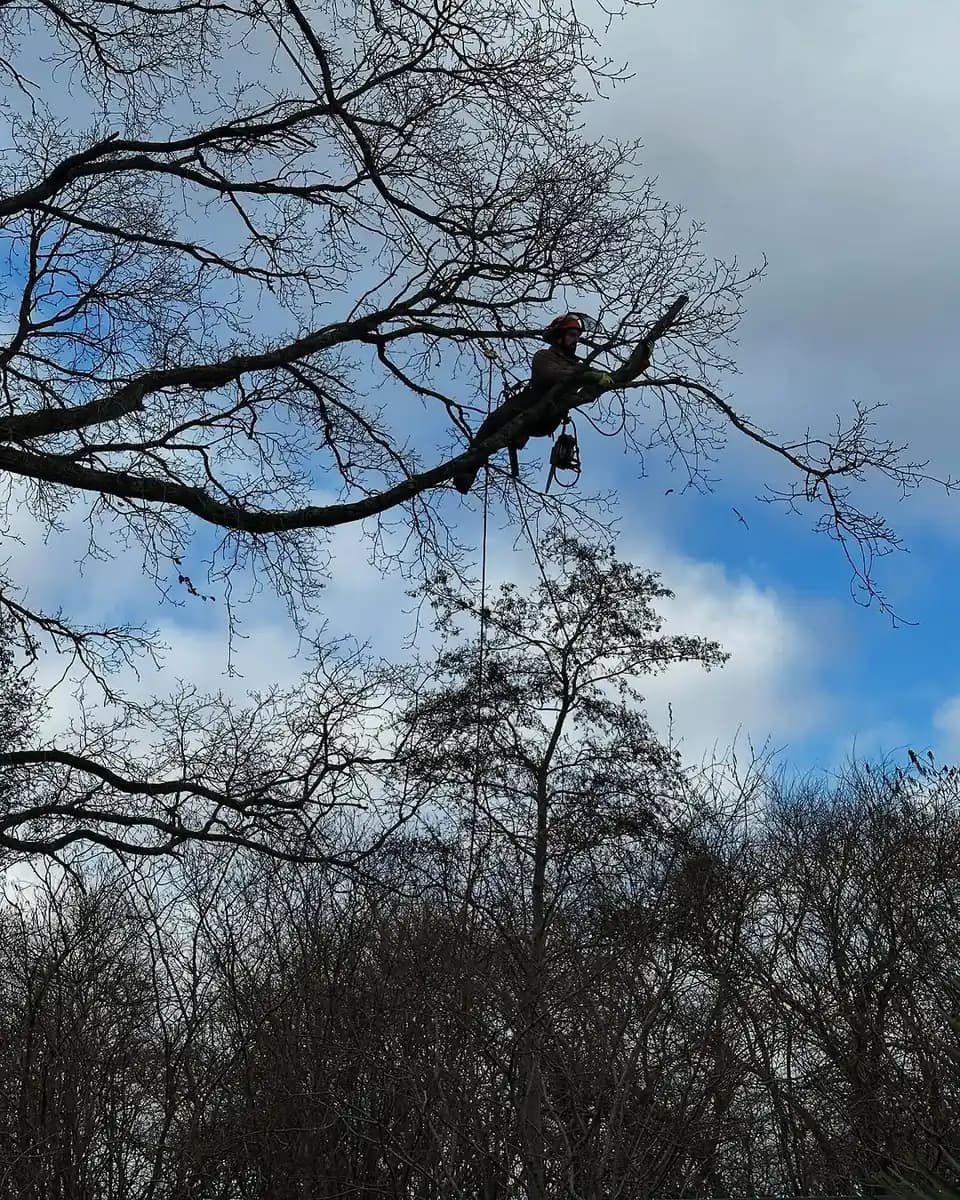
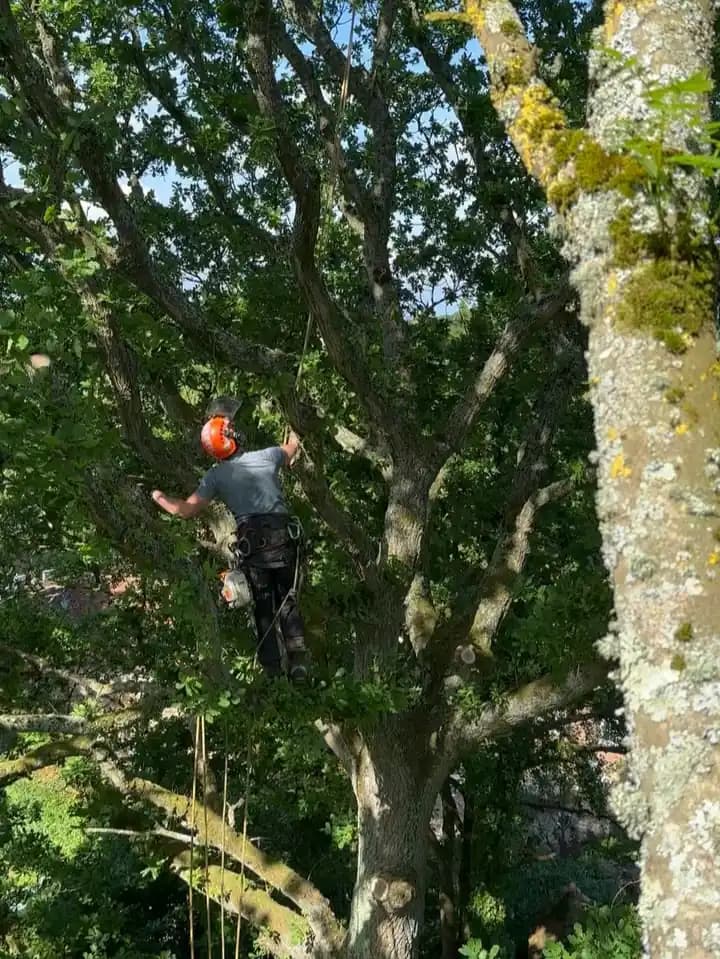
Deadwood removal across Sussex and Surrey to reduce risk in the canopy above gardens, paths, driveways, and anywhere a falling branch would cause a problem.
What the job involves
Deadwood can provide habitat, but a loose or weakened branch above a path, patio or drive may need removing. The team assesses its condition and what is underneath, then removes the agreed sections while retaining the rest of the canopy.
Deadwood does not always mean a dying tree
Trees can shed shaded or damaged branches while the rest remains alive. A new pattern of dieback, however, may justify a wider assessment. Removing the visible dead branch does not diagnose the cause.
What is underneath changes the decision
A loose branch above a seating area presents a different problem from deadwood over unused ground. Suitable deadwood can be retained for habitat where the risk allows. The specification should identify the branches or size of deadwood to be removed.
Removal is a snapshot, not a lifetime guarantee
More branches can die as a tree grows or its condition changes. Discuss whether another inspection is needed and report new hanging branches, splits or sudden canopy changes. Avoid the affected area while an urgent concern is assessed.
- Inspect the canopy and identify the deadwood needing attention
- Assess what's underneath it: patio, path, driveway, garden area, does the risk need prioritising?
- Remove the problematic sections carefully, lowering where the drop zone doesn't allow free-fall
- Check the rest of the canopy while up there and advise on anything else that needs attention
- Leave the site tidy and advise on the inspection interval if the tree warrants monitoring
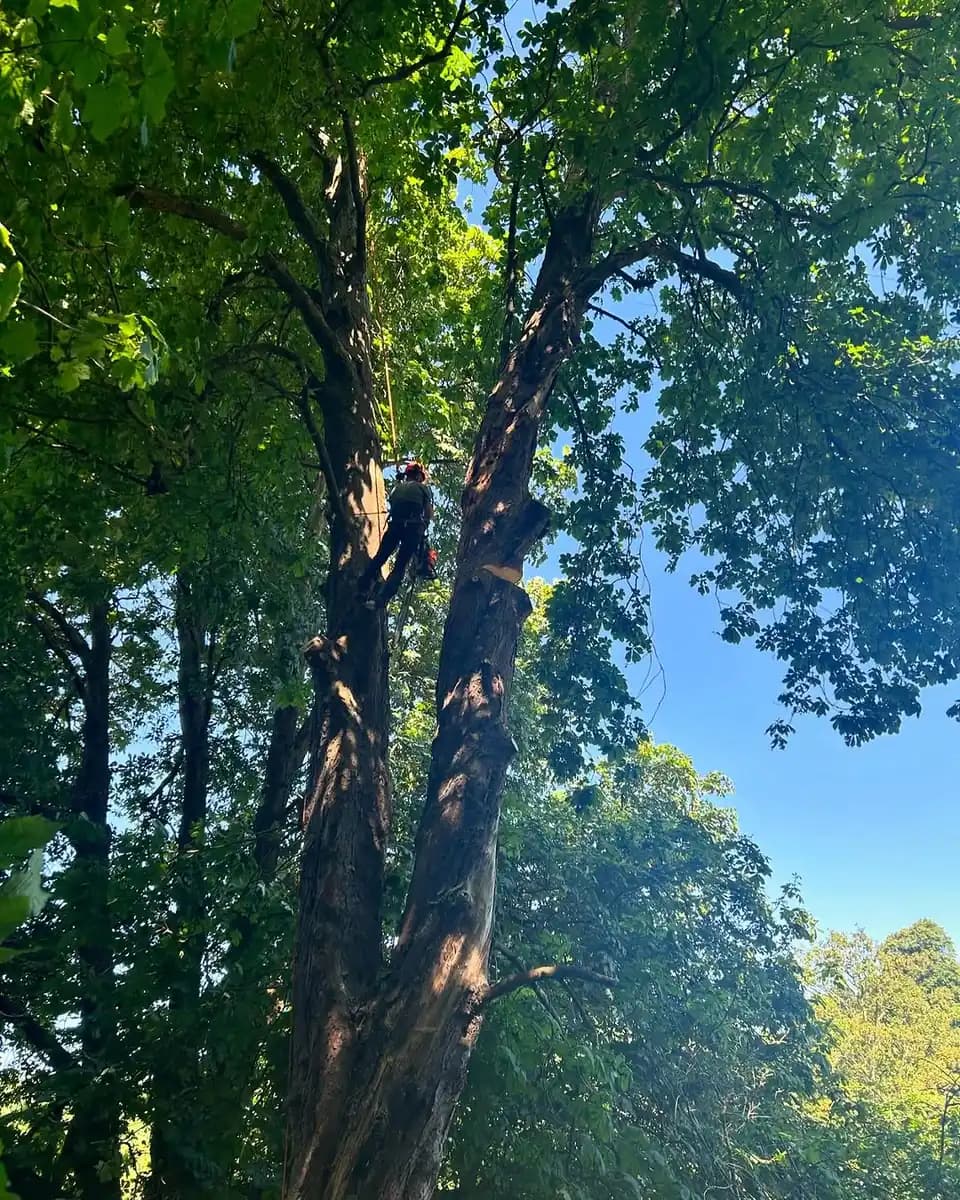
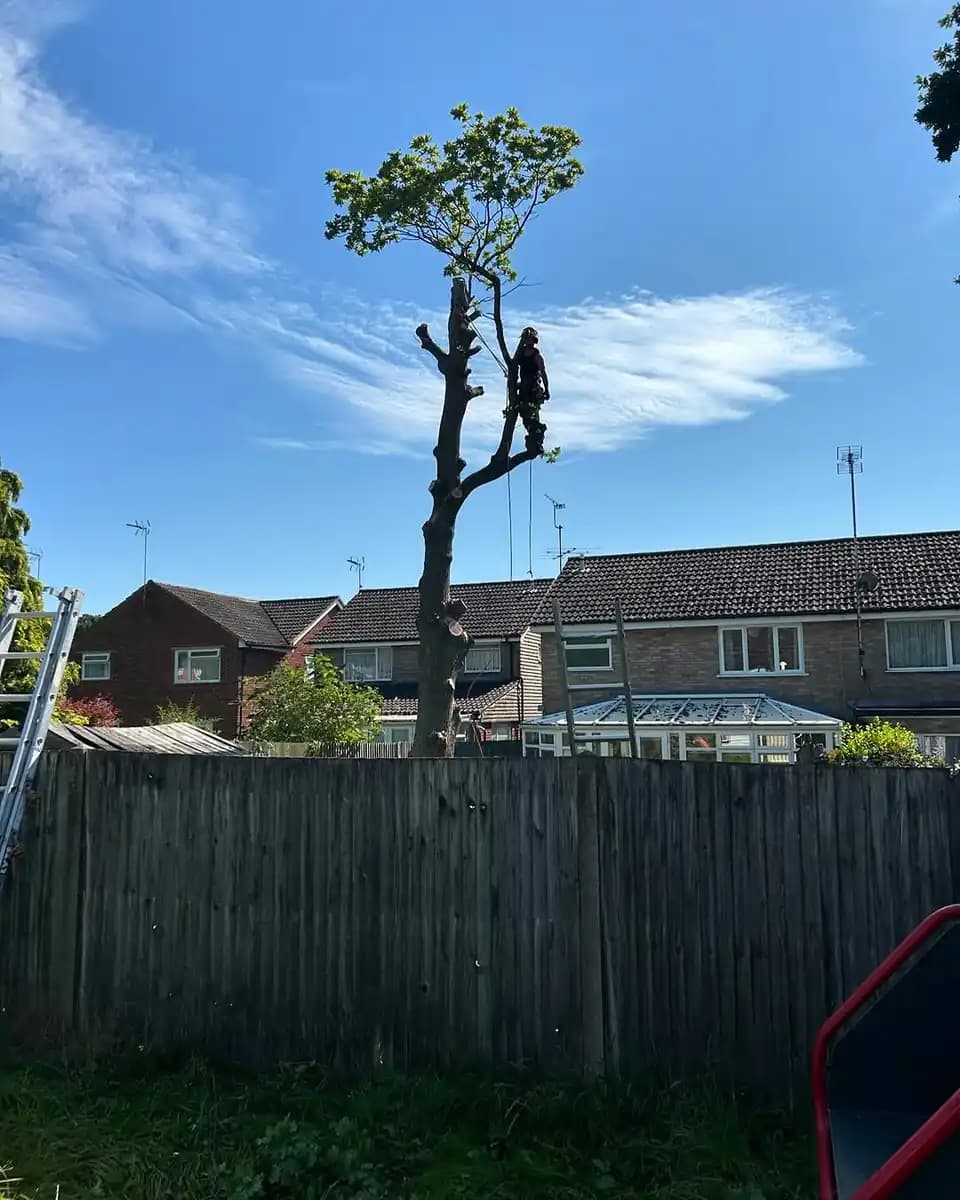
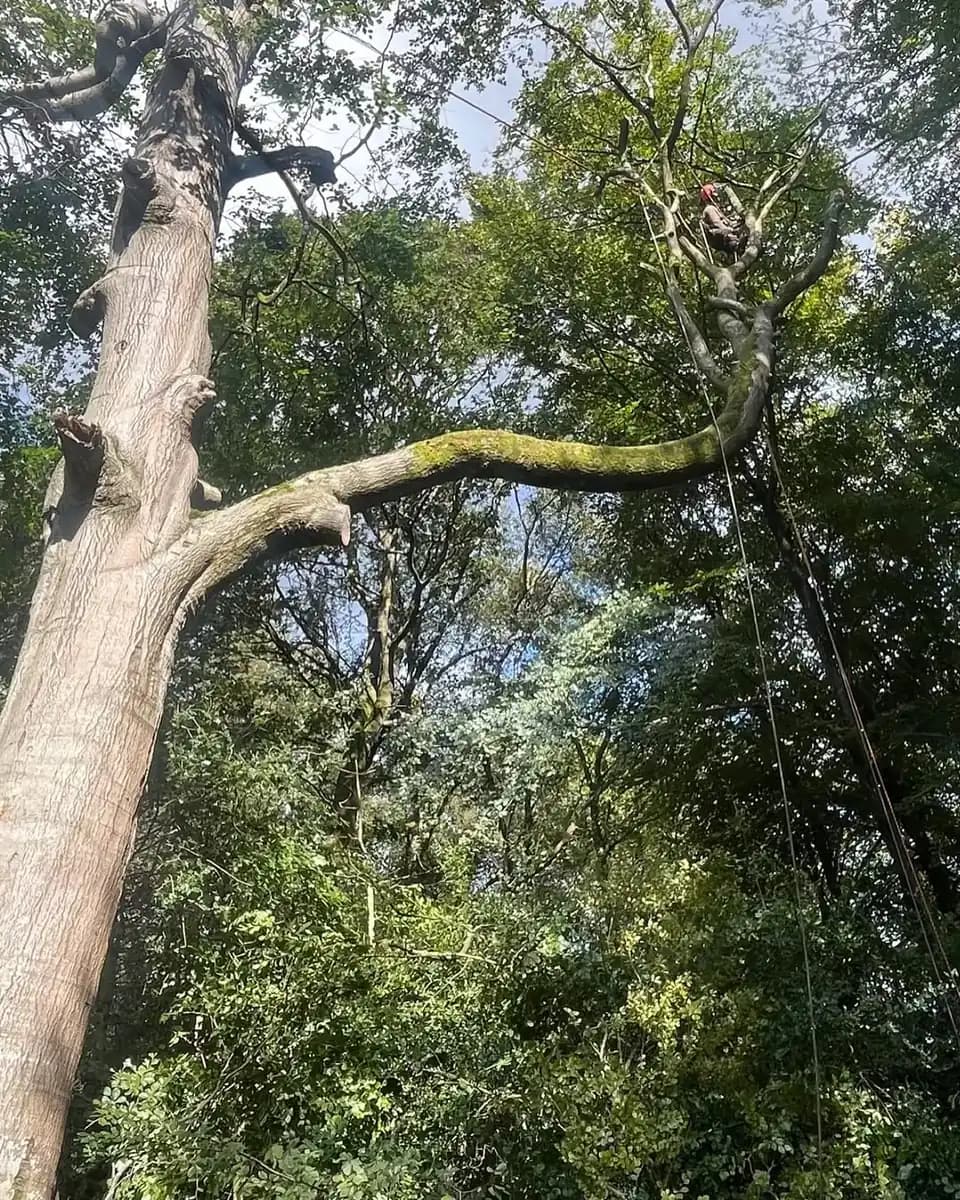
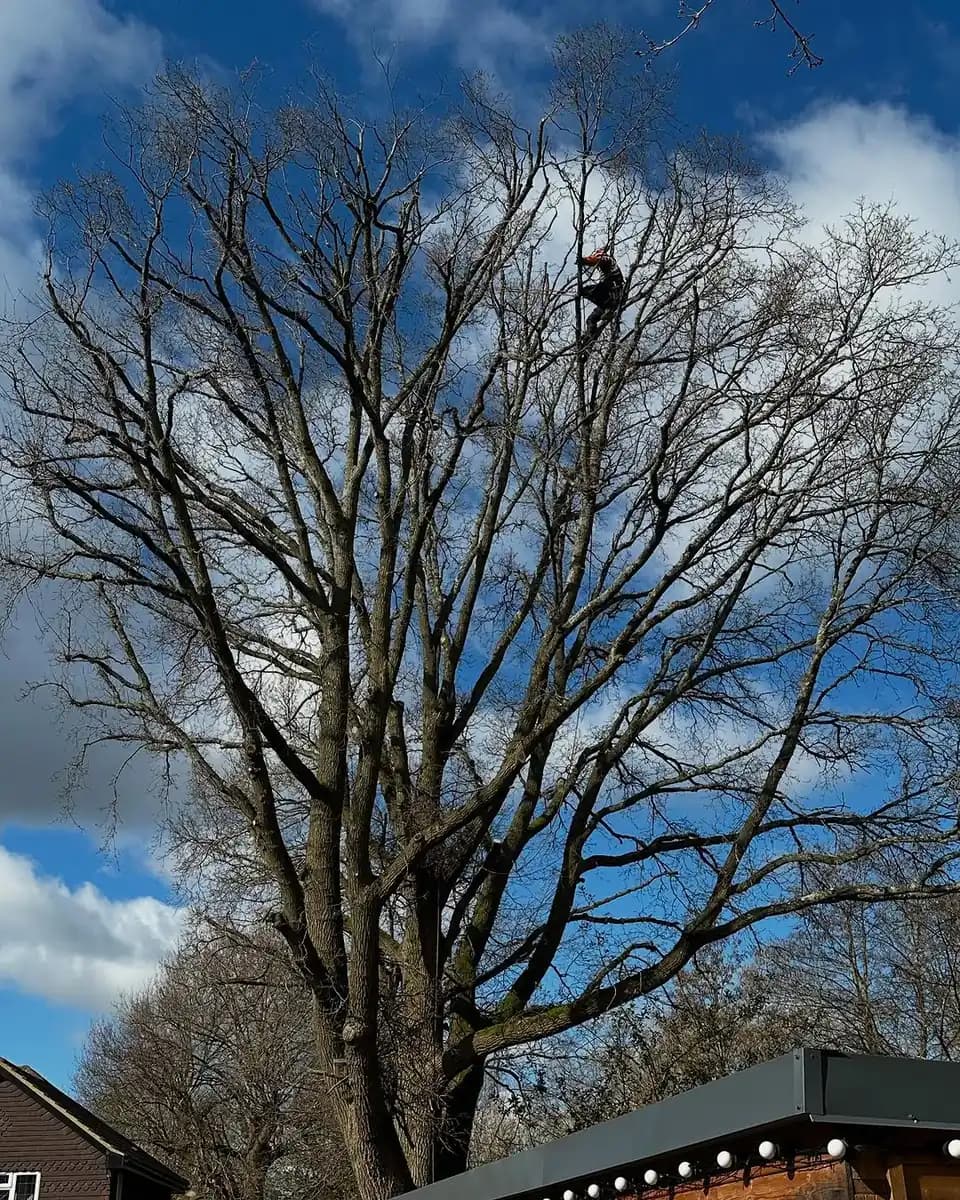

Point out where branches have fallen and which areas beneath the tree are regularly used. The assessment should identify the sections needing attention.
Not sure what you need? Call Brad.
Tell Brad where the tree is, what needs doing and what the access is like.