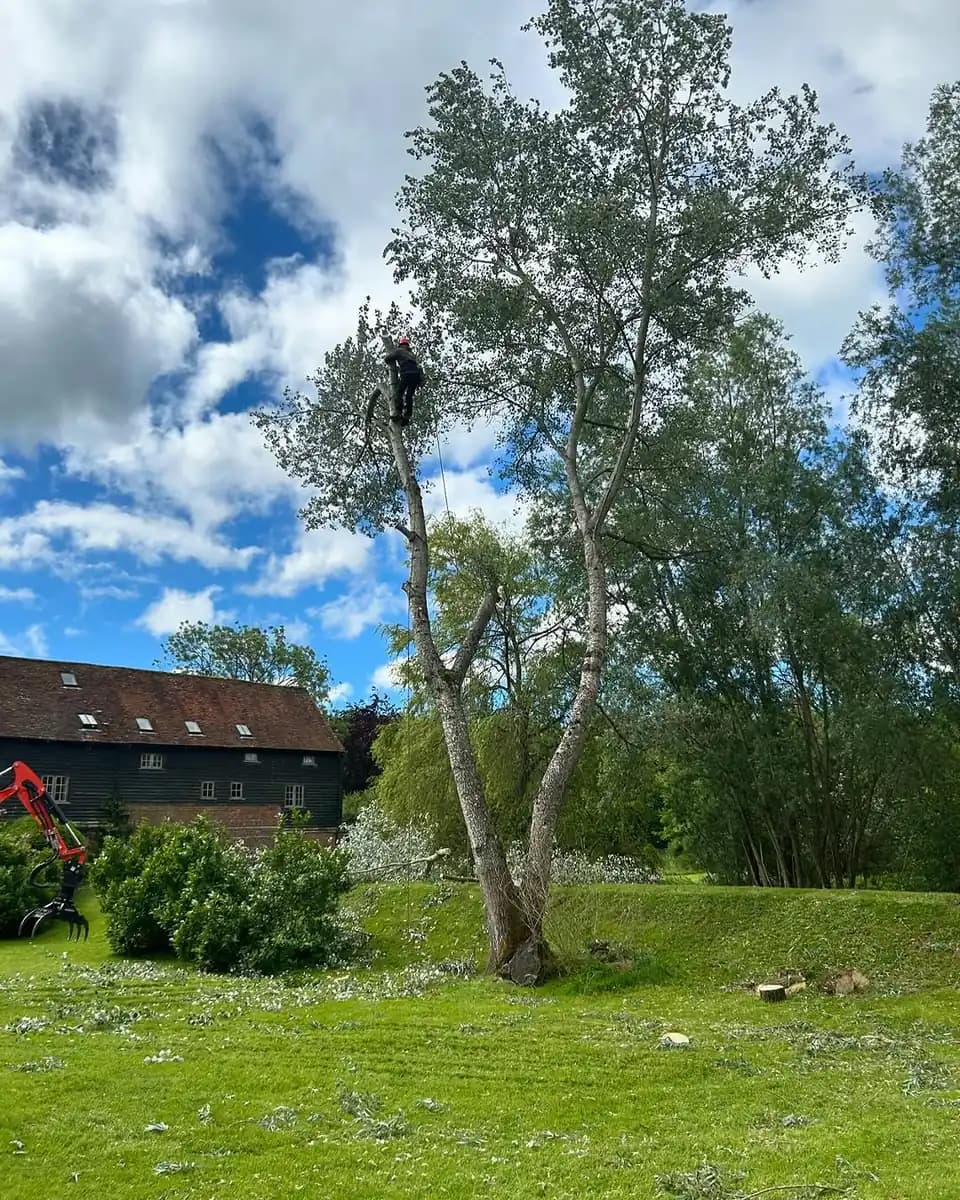
What You Can And Can't Do With A Protected Tree
Before pruning or removing a tree, check whether it is protected. The process depends on the protection: a TPO usually needs consent, while a tree in a conservation area without a TPO may need six weeks’ notice.
Five things worth knowing before you touch a protected tree.
The tree’s protection and the proposed work determine which process applies. Confirm both before choosing a start date. Read the government guidance.
Five steps, start to finish.
Check the authority responsible for your address.
Within a National Park, the planning authority may differ from the district council. Start with the address and identify who handles tree applications there.
Landscape designation alone does not tell you whether an individual tree is protected. Check TPOs, conservation areas and any relevant planning conditions separately.
Before you apply, or before you cut.
How do I check whether a tree is protected?
Start with the local planning authority’s tree map or register. Give the full address and identify the individual tree. Ask the authority to confirm the position if the map or order is unclear.
Is conservation area notice the same as a TPO application?
No. A protected tree normally needs a TPO consent application. For a qualifying tree in a conservation area without a TPO, the usual process is six weeks’ notice. Ask the planning authority which procedure applies.
Can a dangerous tree be removed without permission?
There are limited exceptions for urgent safety work, but concern about a tree is not automatically an exemption. Keep people away, get professional advice and contact the authority. Record the condition and the reasons for any urgent action.
How long should I allow?
A TPO application normally has an eight-week decision period. Do not treat the end of that period as permission. Conservation area notice normally allows six weeks for the authority to respond; the authority can agree to work sooner. Check the position before scheduling the team.
Does consent cover everything in the quote?
Only the work authorised by the decision, subject to its conditions. Compare the approved specification with the quote. A change from pruning to removal, for example, needs a further check.